

Journey through ancient soundscapes...
If, like me, you were drawn to coin collecting through a love of history, then music can be a powerful way to deepen your connection to the subject. It certainly has been for me.
I’ve created a selection of immersive pieces that you’re very welcome to enjoy and keep—completely copyright‑free. Each melody tells a story that is loosely linked to a coin in the collection, and that is available to own on the site.
If you do use any of the music, please let me know; I’d love to hear your thoughts.
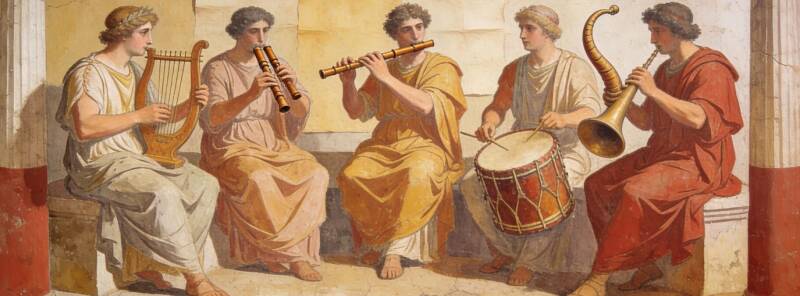
ANCIENT SOUNDSCAPES - ROME
Click on a track to listen, or in the coin image to download...

Ancient Desert Love Song
This track evokes the burning sands of Egypt in the era of Mark Antony and Cleopatra. It calls to mind the ancient scent of the desert—older than memory—and the timeless beauty of the pyramids, already ancient wonders even in the days of the Roman Empire.
This coin features a Roman galley, the kind used at the Battle of Actium, where Cleopatra and Mark Antony were defeated by Octavian in 31 BC.
The Glory of Rome
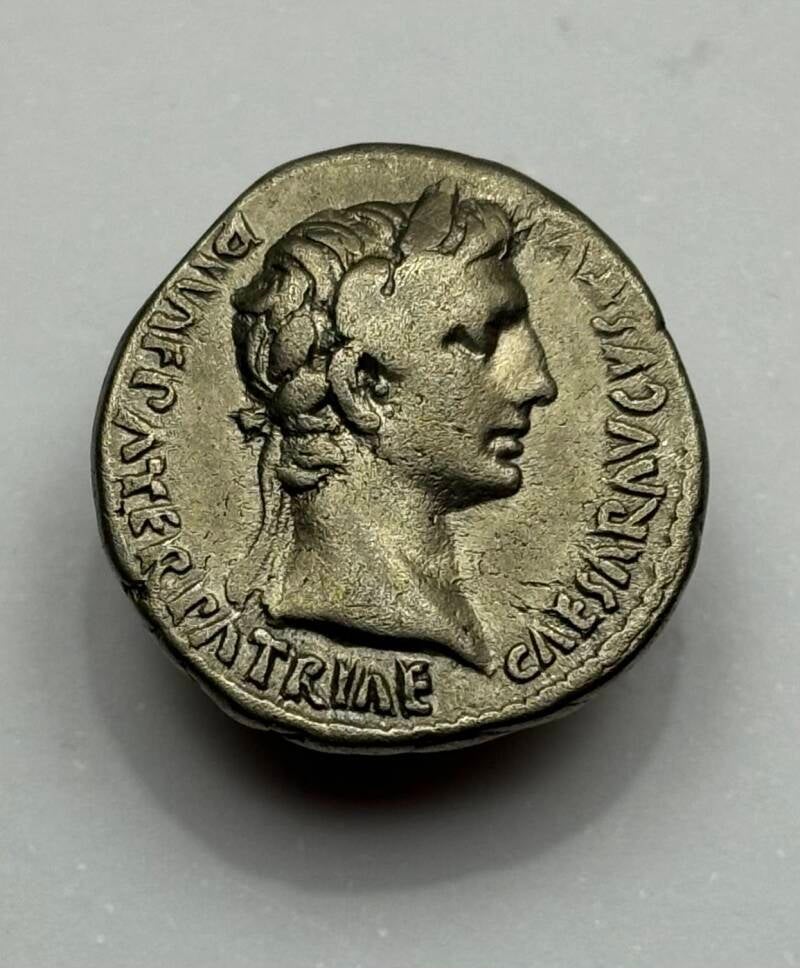
This track recalls the great days of the Roman Empire, epitomised by Augustus, who famously said, “I found Rome a city of bricks and left it a city of marble.” The coin is a denarius from the reign of Augustus.
Augustus ended decades of civil war and ushered in the “Pax Romana,” a long period of relative peace. He also expanded the empire significantly, nearly doubling its size and incorporating Egypt, much of Spain, and large parts of the Balkans.
The Temple of Elagabal
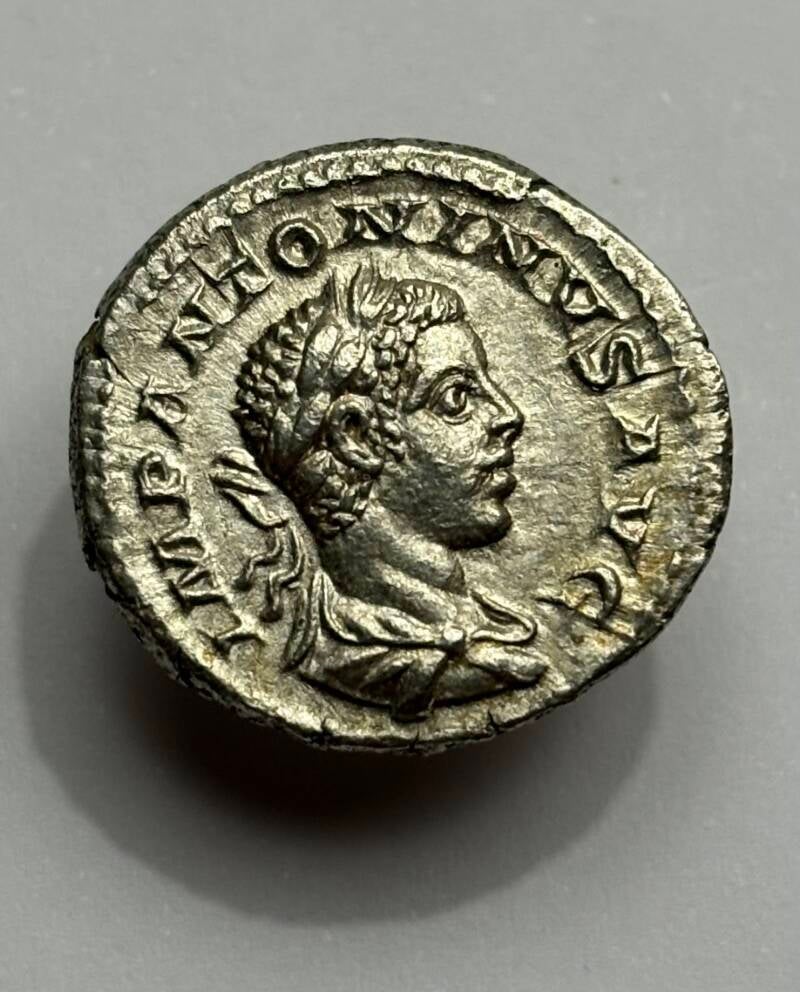
This music evokes the spirit of the Temple of Elagabal, which stood on the Palatine Hill in Rome and was dedicated to the Syrian sun‑god Elagabal (meaning “Lord of the Mountain”). It was the temple associated with Emperor Elagabalus and formed the heart of a mysterious and exotic cult centred on a sacred meteorite, featuring sacrifices, solstice processions, and ritual dancing.
Under Roman influence this deity was often equated with Sol Invictus, the “Unconquered Sun,” and Elagabalus sought to make him the supreme god of the Roman pantheon.
Death in the Arena
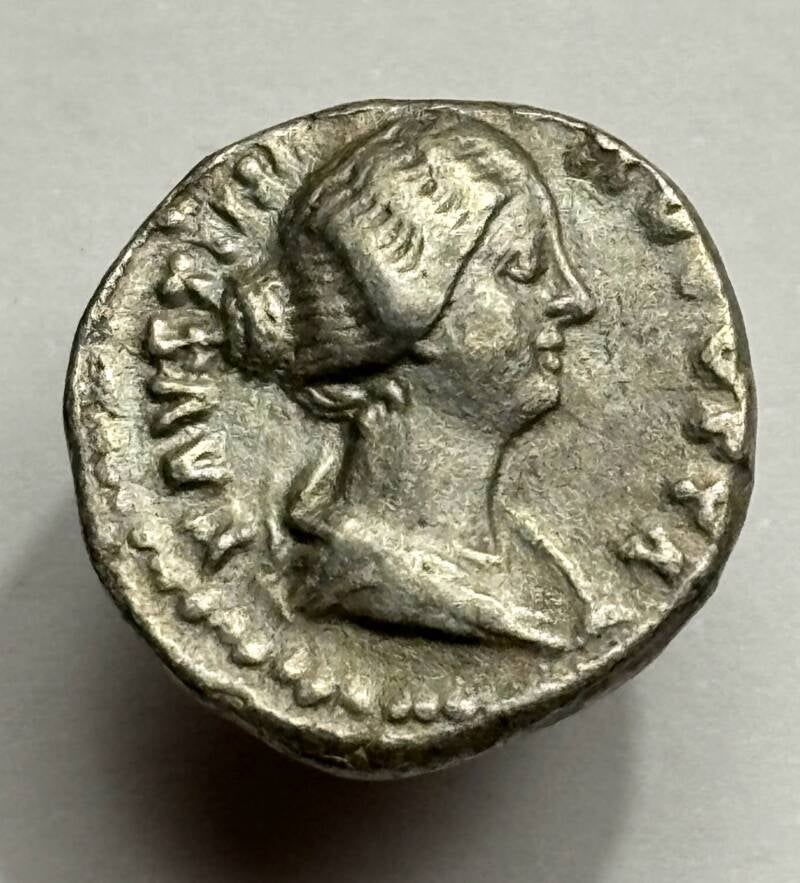
Gladiator fights were commonplace in all major Roman cities, but Emperor Commodus took them to an extreme by actively participating himself. Dressed as Hercules, he would fight against common criminals and other gladiators, with the odds heavily stacked in his favour: his opponents were often “nobbled” in advance, given lead‑weight swords or pre‑injured.
His sister Lucilla, who appears on this denarius and was also featured in the film Gladiator, would undoubtedly have attended such spectacles. This music is composed to evoke the atmosphere of an event like this.
Peace Through Strength
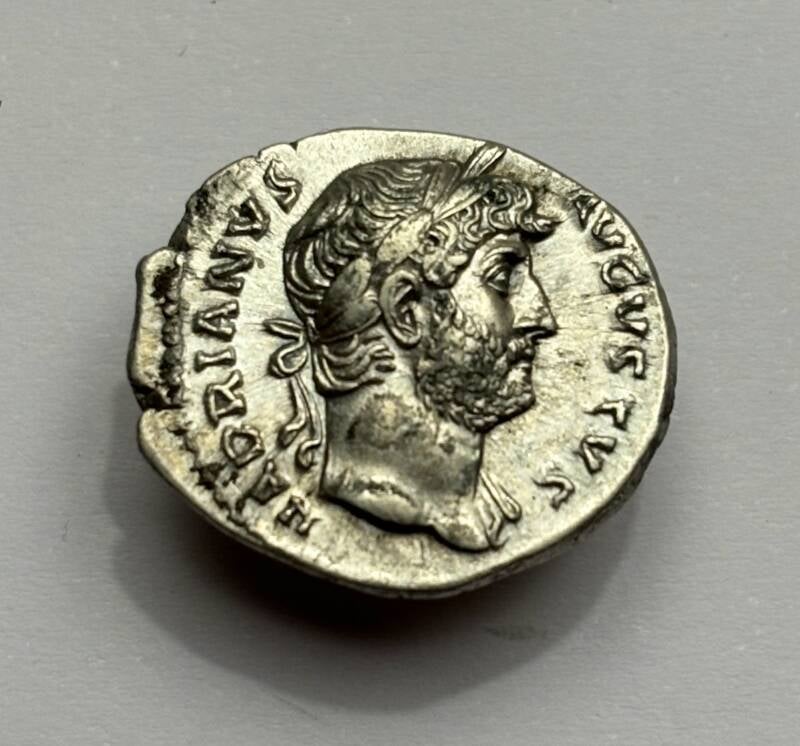
This coin of Hadrian reflects a reign remembered for peace and consolidation rather than conquest. Hadrian’s policy was one of “peace through strength,” with a focus on securing and strengthening the empire’s frontiers, reinforcing garrisons, and investing in infrastructure and monumental building.
The music mirrors this outlook: a sweeping, dramatic theme that builds with quiet determination before rising to a powerful, controlled climax. It captures the idea of growth through strength—steady, deliberate, and majestic rather than violent or disruptive—epitomising the calm, ordered atmosphere that Hadrian sought to maintain across the Roman world.
The Gate of Alexandria
In ancient Roman times, Alexandria was a dazzling, cosmopolitan city where the scent of the desert mingled with the salty tang of the Mediterranean and the rich aroma of incense, spices, and baking bread in crowded streets. The air carried the dust of the Sahara from the edge of the city, blended with the perfume of oils and flowers sold in its markets, the smoke of temple sacrifices, and the faint fishy smell of the great harbour, creating a heady, exotic atmosphere that felt both Egyptian and powerfully Roman.
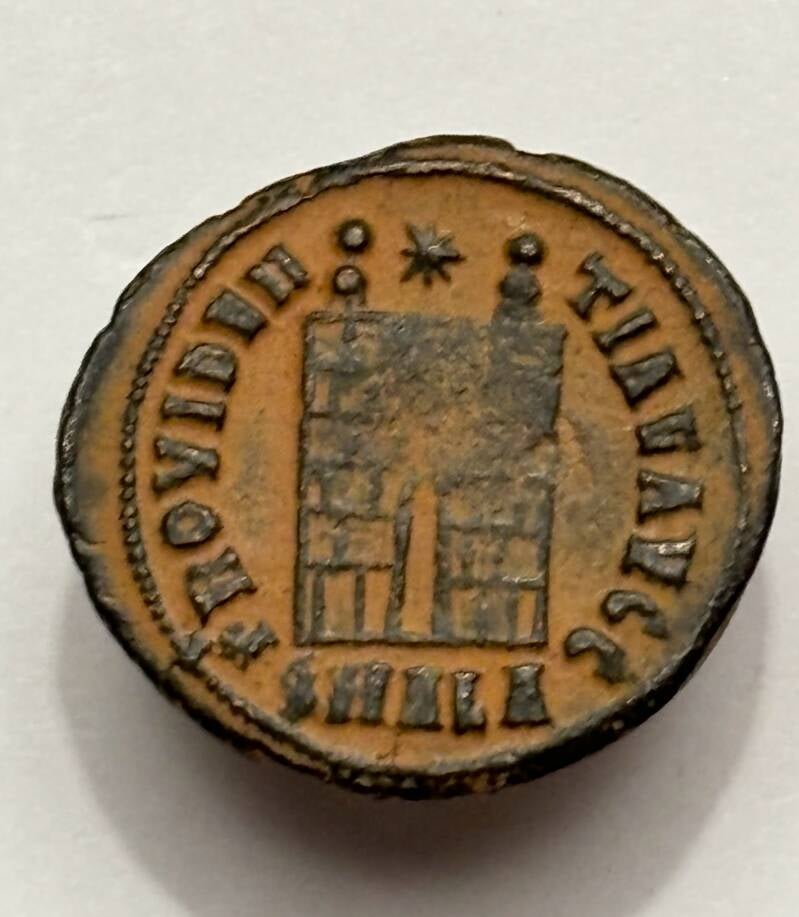
This coin features the “gate of Alexandria” from the reign of Constantine—likely one of several military‑style gates associated with the city.
The Palatine Hill
The hill above Rome is the Palatine Hill, one of the city’s seven famous hills and traditionally regarded as the birthplace of Rome itself. In Roman times it was the most prestigious residential area, lined with the grand homes and imperial palaces of emperors such as Augustus, Tiberius, Nero, and Domitian, sitting high above the Forum and the Circus Maximus like a luxurious, green‑topped acropolis at the heart of the capital.
Nero transformed the Palatine into the core of his vast Domus Aurea (Golden House), a sprawling palace complex that spread across the hill and into the surrounding valleys, renowned for its opulent decoration, marble halls, and innovative architecture.
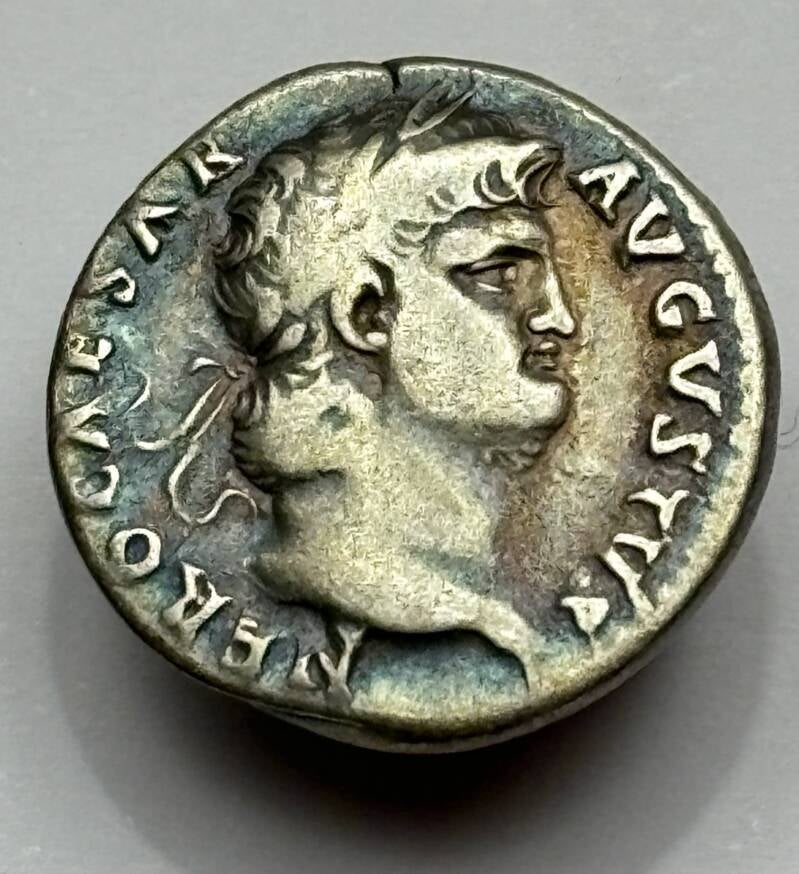
This coin is from the reign of Nero, whose massive palace was built into and around the Palatine Hill.
Discover more ancient treasures
After enjoying our music, explore our extensive collection of ancient and historical coins. Each piece tells a story, much like the melodies you've heard.